Ten years!

Ten years!

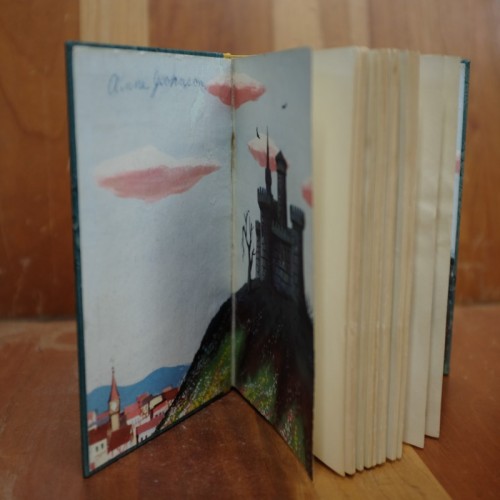
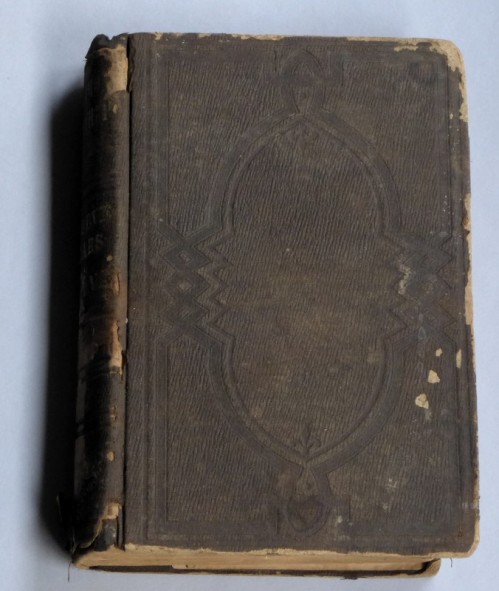
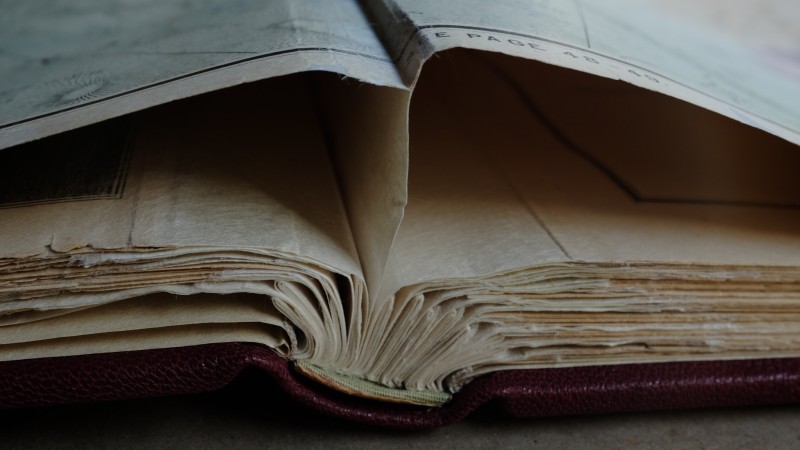
This was my Grandma Roz’s copy of the Fannie Farmer cookbook. Nothing left of the covers other than a scrap of the spine, I rebound it as a project in the bookbinding program at North Bennet Street School when I was there ten years ago. The book is still going strong through consistent use. It stays open flat enough to cook with without having to weigh down the pages or use some kind of cookbook stand contraption. Humble cookbook repair remains one of my favorite parts of being a book conservator in private practice, forming its bread and butter, so to speak. Anyone who has been to my kitchen knows I love cookbooks! I love to cook, so it’s natural that I like to keep those Joy of Cooking, Betty Crocker, Good Housekeeping etc books in good shape for all you home cooks out there.

Fannie-coversFannie-open

2 Comments

May 16, 2013 · 9:09 pm

This is my job.

Yesterday and today, I have been working on a special project: making lifting knives for my Intro to Book Repair  students. I have to make seven of them, which is twice as many knives as I have ever made at once, and seven times as many as I have ever made of one type. It takes a long time to make even one good knife by hand, so it’s a fair job for me. I began by visiting Noisebridge, a local hacker space which also happens to have a wood shop, to use their bench grinder to grind the high-carbon Sheffield steel blanks down to the right shape. A few of the young computer guys would come in and chat with me from time to time about what I was doing, and I got a lot of raised eyebrows. It turned out one of the guys who keeps up the wood shop is from Madison, so we got to talk about how much we miss a good cheese curd. Two other dudes came in to use the router in order to make a slit drum, and there was a lady making phoenix stencils and painting and sanding pieces of wood. Meanwhile, outside the wood shop, Noisebridge is having its weekly 10 minutes of fame event, where people share what they like to do. The place is packed! I heart SF.

The blanks having been shaped, I progressed to the actual sharpening process. We learned to make our own knives when I was at North Bennet Street School, as I have mentioned in this blog before. Although that process was painful, frustrating, and time-consuming, filled with lots of whining, crying, and the sharing of disturbing nightmares among my fellow students (Mark, I’m so sorry we put you through all that!), now I feel totally confident when dealing with anything knife-related, from small hand tools to board shears and guillotines. Since then and now, I have had a lot of time to think about steel, its uses, types, and qualities, and observe the tools I see in the field. I can appreciate the extreme hardness of the steel we use for our bookbinding tools. I have experienced tools that hold their edges and tools that don’t.

In any case, now I use a combination of Jeff Peachey’s sharpening system, a dry system which uses disposable sheets of progressively-smaller grit microabrasive papers, and my good old Japanese water stones from school.

The 6000 grit water stone with nigura stone in the foreground. Finishing strop is to the right, and three knife blanks at the back (with my own lifting knife in its sheath on top).

The 6000 grit water stone with nigura stone in the foreground. Finishing strop is to the right, and three knife blanks at the back (with my own lifting knife in its sheath on top).

Although the adhesive-backed papers are really easy to use, and much cleaner than the water stones, I used the water stones to create the edges on my seven students’ lifting knives.

From left to right: a Hewit paring knife I use as a blank; two right-handed lifting knives after being sharpened on a Peachey slab of 80-micron sandpaper, left-handed knife after same.

From left to right: a Hewit paring knife I use as a blank; two right-handed lifting knives after being sharpened on a Peachey slab of 80-micron sandpaper, left-handed knife after same.

The cleanup is worth it when you make multiple knives, and I try in general to stay away from disposable stuff unless the convenience really makes a difference. Well, the water stones really came through for me today, and though the knives are all a little irregularly- shaped, I am really happy with the bevel angle and the fact that they’re all sharp enough to shave. Ready for a class full of eager future book conservators!

It's shaving! You can see here the hair on the bevel. Game on, bookbinders!

It’s shaving! You can see here the hair on the bevel. Game on, bookbinders!

4 Comments

Filed under Uncategorized

Modern Shop Talk

The bookbinder’s trade has evolved in a rather solitary way these days, at least in North America. It hasn’t always been such. Depending on the size and region of the shop, there would be enough workers to support a division of labor into separate departments such as folding, sewing, forwarding, finishing, paper beating, paper sizing, ploughing, and edge treatment. Binders in European seventeenth century encyclopediae and manuals show jolly shops with generally cheerful workers all doing his or her own part. (For more on those, see Mirjam Foot, Bookbinders at Work, Oak Knoll 2006.) Even as late as 1906, we see the roster of the Doves Bindery in this photo, happy together and probably fresh off one of their lunchtime croquet matches. (If you made books as finely as the Doves, one might say you’d earned your afternoon croquet.)

Doves personnel

By comparison, this oft-published etching of Roger Payne from 1800 shows what happens when a bookbinder works alone in a garret for too long, though Payne took the status and skill level of bookbinding much farther than anyone working in the trade at the time.

rogerus payne

Is there some kind of line to be drawn between happy bookbinders working in concert with one another and unhappy, solitary, dark souls, hammering out reading material fit for the bookshelves of a king? I don’t think it’s quite that simple these days; however, one thing I do know is that it’s great to get together with other bookbinders and swap horror stories, tall tales of glory, and of course, just a sliver of plain old-fashioned gossip. Some might call this “shop talk”, but since no bookbinder I know works in anything similar to what is known as a “shop”, perhaps we can call it kvetching? Venting? Or just the modern bookbinding version of shop talk.

My old friend and compatriot in bookbinding from Chicago, Karen Hanmer, visited San Francisco for a few days in October to teach her brilliant way of doing things, and I was ultralucky enough to host this Famous Bookbinder while she taught here. Karen’s formal training in bookbinding is from the American Academy of Bookbinding, but my immense respect for her stems from the fact that experience is her guide, and she is constantly working and trying new techniques and binding styles. The space race of the 1950s, the early history of computers, and midwestern prairie imagery figure heavily in her work, and I must confess some envy of her quirky creative perspective. She and her husband travel by train almost everywhere they go, and they’ve taken some pretty neat trips together.

I also like Karen’s unpretentiousness, her humility about her own work, her uncompromising work ethic, and her desire to learn something from every project regardless of how well it turns out. Over the years I have seen Karen’s work evolve and her focus change and change again, and it is fascinating to me how dynamic the field of bookbinding seems when I think about the range of projects she has taken on. Typically I am not a “content guy”, as some have noted– rather more interested in technique and structure, but Karen’s creative work inspires me to devote more time and energy to design, color, and maybe even one day, content. That is one quality of a great friend– he or she likes you as you are, but will also draw you outside your comfort zone and encourage you, either literally or by example, to try new things. When we both lived in Chicago, we would show each other our worst binding mistakes, the most embarrassing boo-boos or bad design choices, and we assuaged each others’ guilty feelings as only the best friends do. Will do better next time and keep soldiering on.

While Karen was here, we didn’t have too overmuch time for hanging out– she taught classes over four full days, mostly to full groups of ten students. It is exhausting to be on stage all that time for anyone, and I also had to work each day she was here except Saturday.  We would eat dinner together and pretty much pass out just after! On her last day here in San Francisco, we went to see the mural by Diego Rivera at City College. It’s something I’ve always meant to do, but never devoted the time to doing it, and it was amazing. It’s remarkable that the mural is open to the public, viewable anytime the theater is open (11-4 Tuesday through Saturday). There was a student docent (history major, no less!) sitting near the mural to answer questions about it, and he was really helpful and informative.
Thanks for visiting, Karen! I’ll miss you! And thanks to Hand Bookbinders of California and the San Francisco Center for the Book for arranging for Karen to teach here.

IMG_0856

Leave a Comment

Filed under Uncategorized

New Work, New Classes

I am excited to be doing some work for Dana Smith and Steve Macdonald. I’ll be binding a total of 27 copies of their book Sweet Call and Response. I love this work and how the printed imagery combines with embroidered shading, blocks of color, and detail work. They’ve dropped off two giant stacks of raw pages for me to sew and bind into hard covers just today, so I’m about to get cracking at it! I’ve already bound some advance copies for them, and here are some images of those books that are already complete. You can see more of this book, and Dana’s work, here.

Printed cover cloth

Fly fishing with satin stitch edge

Geometric pattern with full moon

Embroidered shading outlines this black and white palm tree

Detail of embroidered edge– you know how I love edge decoration…

Local Interest

Soon another round of Beginning Bookbinding at the San Francisco Center for the Book will begin. As of today, there are only three spots left in this class, which runs on Wednesday evenings in June and July. Beginning Bookbinding is the first half of the certificate program at SFCB, and is structured to provide a hearty, solid foundation in bookbinding, focusing on hand sewn books with hard covers. It is heartening for me to work with such students as I have been extremely lucky to have! It’s been a lot of fun, and much has been learned by all.

Lovely *and* fun

Various styles of books we make in Beginning Bookbinding, all sewn by hand with hard covers

Speaking of classes, I just completed a round of calligraphy classes (as a student!) through the Friends of Calligraphy. Judy Detrick was our amazing instructor for (you guessed it) Book Hand. I love the legible, circular shapes of Book and Foundational hands and their connection to greater developments in the history of the book. I’ve tried to learn Book Hand on my own, reading, absorbing, and practicing for a few years, but nothing compares to personal attention from an extremely skilled practitioner of the craft. My writing is still pretty humble, but much improved, and much easier and enjoyable to practice now that I know some tips from a pro!

Practice, practice, practice… and more practice, and perhaps some. more. practice

However, it is now time for me to, as they used to say, “return to our regularly scheduled programming” (live television broadcasts seem so far removed from me these days, yet ingrained my memory!)… Anyway… back to the books!

Leave a Comment

Filed under Uncategorized

Books with Friends

The Friends of the Public Library giant spring book sale at Fort Mason Center happened a couple weekends ago, and I helped out this year again as a volunteer cashier.

So many books! So little time to shop…

Compared with antiquarian book fairs such as last weekend’s in New York (for a bookbinder’s-eye-view, see Gavin Dovey’s post here), the offerings at the Friends sales are somewhat more humble (though I have seen some rare editions go out the door for the mere $3 for a hardcover). But what I love about the Friends sales is that they are for people with a Serious Reading Habit, who have to have the real deal: a Book. I like to work the checkout lines at these sales to see what people are buying and chat with them about the thing that has brought us together: reading!!! That way, I also get to pair up with another volunteer, which makes the time go by quickly. Laurie, who I worked with, is a retired math teacher from San Jose, and was superfun to work with. When our shift was over, I got to pick out some things for myself (as well as for my Intermediate Bookbinding class). I love to see all the books at the sales that reflect life in the San Francisco Bay Area: tons of back issues of Sunset magazine, hiking books up the wazoo, coffee-table photo books of highway 1, and tables full of books about Linux and other code- related endeavors. I was pretty happy to find a rare vintage copy of the 1971 Anybody’s Bike Book, published by Berkeley’s own Ten Speed Press.

Another thing I did that same weekend was take a printing class at the San Francisco Center for the Book! As an instructor, I get credit to sign up for their other classes, and I never miss an opportunity to do so. This time I picked Double Trouble: Type and Image on the Vandercook with Adam Ewing. Check out his work here. So beautiful! In the class, we all carved linoleum blocks with images, then used the Center’s wood type as a base to transfer from and carve letterforms in our lino as well. With just two inkings, we made these cool posters.

The field of printing and printmaking is totally new to me, and it’s a great learning experience for me to branch out a bit from bookbinding. Next week I will start one of the Friends of Calligraphy classes– of course I had to choose Bookhand. Typography, calligraphy, graphic design, and printmaking as well as bookbinding truly flourish here in the bay area– there is always more to learn.

Leave a Comment

Filed under Uncategorized

New toys… I mean, new tools! …For new toils.

Though I have heard for a long time and from many bookbinders that knives made by Jeff Peachey are sharp and hold their edge well, I have never had the opportunity to test them out myself. As I am a graduate of the North Bennet Street School‘s bookbinding department, I and all my colleagues made our own knives for conservation and leather paring. We valiantly (and at times less than valiantly) struggled with it, grinding and honing the traditional way with steel blanks and Japanese water stones. I have used these knives since 2002 when I made them, and they form a cornerstone of my practice as a bookbinder, almost more important than my bone folders!

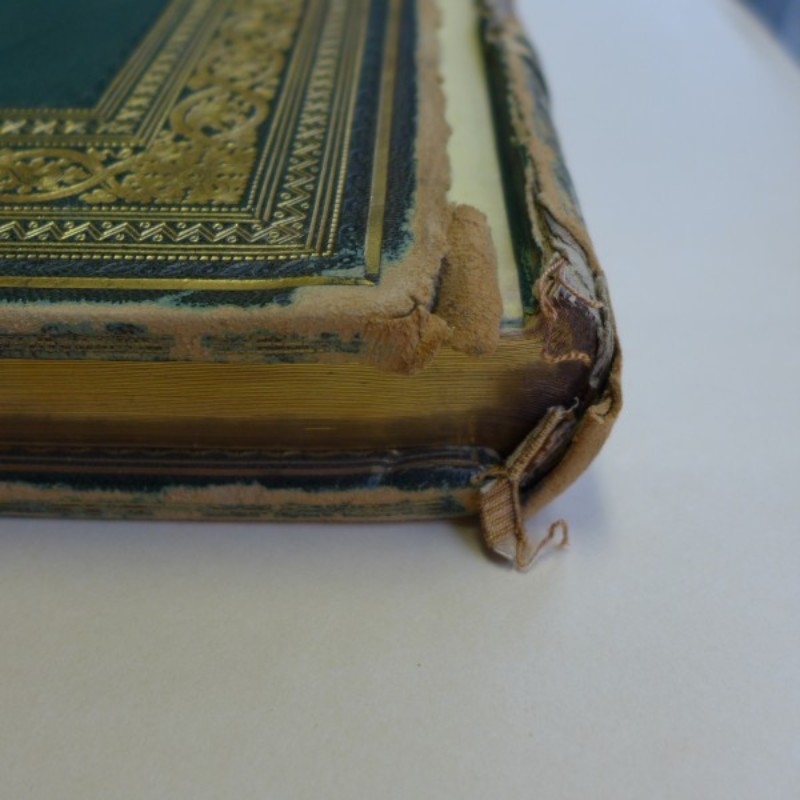
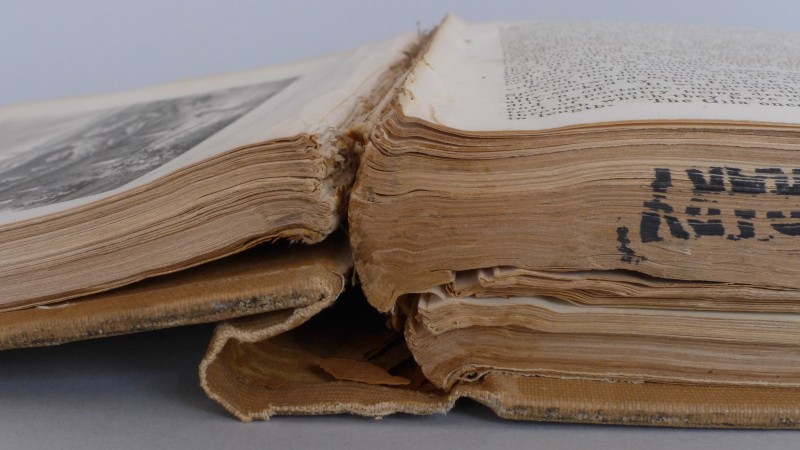
Leather paring knives allow you to reduce the thickness of the leather you use to cover a book, which in turn allows for complex and subtle shaping of the movable parts of the book you are making. Lifting knives, used in conservation, allow you to separate the covering materials of an old book in such a way that when you put them back together after the structure has been appropriately strengthened, the fissure is inconspicuous. Thus, a good set of knives is essential to the livelihood of a skilled craftsperson, and when they’re hand made, knives express even more deeply the expertise and respect with which one practices one’s craft.

Some of the first results from the new Peachey knife

Right away I can tell I will enjoy using Jeff’s A2 English leather paring knife. The shaft has a contoured shape and is rounded on the edges, which will make it easier to hold through hours of leather paring. The English leather paring knife is different than the rounded French knife I have been using– with the French knife I can pare on either side of a cut edge of a piece of leather, whilst the English knife is limited to paring on the left side. However, possibly because of the straight edge of the English knife, it seems to be easier to cut a broader bevel on the leather, and thus pare large swaths thinly enough to create leather labels and onlays of .1-.2mm thickness easily. I typically use a Brockman for this kind of work, but it’s nice to know there’s another way. The long bevel would also be useful for the long edges of the new leather introduced in leather rebacks, where a very gradual change in thickness of new leather is desirable underneath a layer of old leather.
The A2 steel is quite a bit thicker, and thus heavier than the knives I’m used to. That makes it more tiring on the hand, but I can tell the difference in how it holds its edge during paring. It did need to be stropped once while I edge pared six edges each about 30 cm long, but the leather was fairly stiff, so I thought the knife performed well. This will be a great addition to my happy family of bookbinding knives.

From top to bottom: Leather corner cutting knife, lifting knife, small lifting/ board corner cutting knife, Peachey English leather paring knife, round French leather paring knife, dull cobbler's knife (sharpened for paper slitting). They are kept on a magnet so they are close at hand, yet out of harm's way, and the edges never abrade against a sheath.

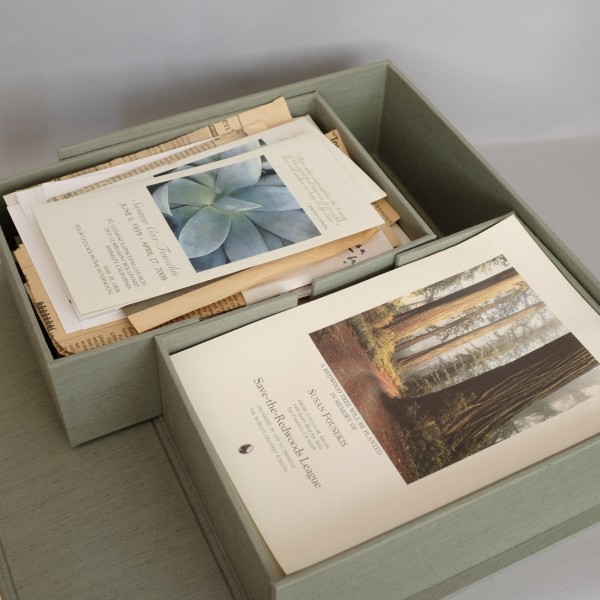
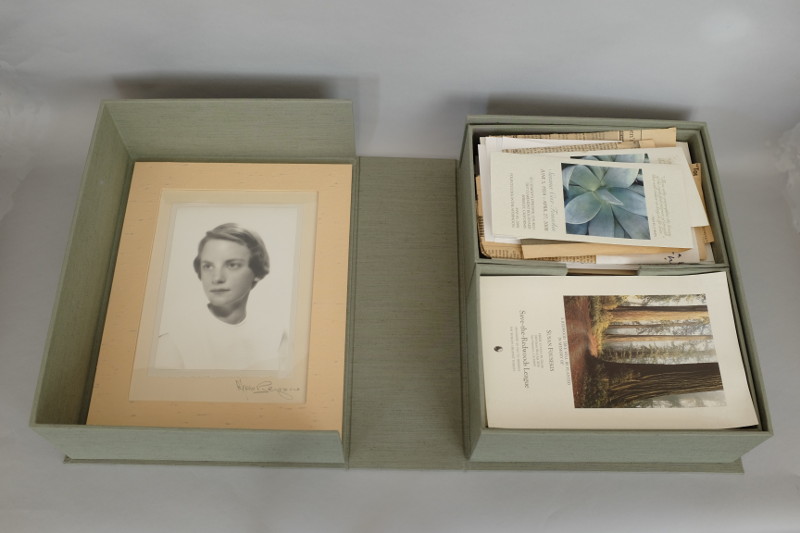
This week I will be making a very large full leather cover for a collection of heirloom photos and ephemera for a local family, so I will have the opportunity to become thoroughly acquainted with my new tool! I look forward to it. If you are interested in looking at some of the other very thoughtfully designed tools Jeff Peachey produces, or would like to read his blog, I have linked to his website on the sidebar to the right.

1 Comment

Filed under Uncategorized

Another Installment: Pleasure Reading, Summer Updates

Last night I had the great good fortune to visit one of this fine land’s most fascinating libraries. It has no formal cataloging system nor many of the usual finding aids, inhabits a single room, and yet is one of the best-organized and most expansive collections I’ve seen. How can this be? For the answer to that riddle, you just have to visit… It’s located at the corner of Howard and Eighth Streets in San Francisco. You could also read Megan Prelinger’s own statement about how the library is organized and how it came to be.

Lucky for me, it’s just a short bike ride away, but for those of you who can’t make it in person, the Prelingers have digitized many of the materials in their collection.  Did I mention they’re appropriation- friendly? That’s what “Free Speech, Fear- Free” is about. Thousands of their books and other materials are available for viewing or downloading for free through the Internet Archive. One of my favorites is here: who knew that another term for shipwreck is ‘submerged cultural resource’?

Since I am able to visit the library in person, and since the Prelingers are so encouraging of snapshots, I’ll share some of my own here. They’re just from a very small section I browsed. I came upon many more happy coincidences while I was there—some recipes from Nance Klehm on sourdough bread starters turned up in a small publication on Soil that was hanging out on the Returns shelf.  I also found articles from the 1940’s journal Modern Industry with titles like, ”Six Ways to Tell if Your Employees Are Doing Their Jobs” opposite the biography of Frederick Winslow Taylor and other labor history and Situationist International books. So here’s just a little smattering of front covers and shelves I found…

…a page of Cage…

…some really great tips here!…

…Whole Earth Catalog… a few pages before this one had some very precise instructions for removing porcupine quills from your dog’s fur. aww…

…more Whole Earth Catalog…

…mightn’t everyone need these books someday?…

…vast shelves to be explored…

+-+-+-+-+-+-+-+-+-+-+-+-+-+-+-+-+-+-+-+-+-+-+-+-+-+-+-+-+-+-+-+-+-+-+-+-+-+-+-+-+-+-+-+-+-+-+-+-

In early August, a friend and I took a road trip up the coastal highway of northern California. It was mysterious, magical, and so new for me, as I had never travelled it before.  Unfortunately I can’t come up with a single connection to bookbinding… though maybe that’s the point. I finally did something totally unrelated to bookbinding, and I actually had a great time! There are too many pictures to post here, so visit my flickr page for views.

Leave a Comment

Filed under Uncategorized